Reviewed and Updated: July 3, 2026
Moving out can feel like a race against time. You are packing boxes, confirming movers, changing utilities, clearing storage spaces, and preparing to return the keys. In that rush, it is easy to miss the oven interior, forget a closet shelf, leave hair in the bathroom drawers, or skip the final photos that prove how the property looked when you left. These move-out cleaning mistakes can create problems during a landlord inspection, delay your handover, and lead to avoidable cleaning-related questions afterwards.
This guide explains the cleaning mistakes renters commonly make before leaving an apartment, condo, townhouse, or rental home in New Jersey. It is written to help you clean in the right order, check easy-to-miss details, and prepare for a calmer final walkthrough. A thorough cleaning may help reduce avoidable cleaning-related issues, but it cannot guarantee a full security deposit refund because lease terms, unpaid balances, and damage beyond normal wear and tear can also affect the outcome. New Jersey’s Department of Community Affairs provides official security-deposit guidance for residential tenants and landlords.
Quick Answer: What Are the Most Common Move Out Cleaning Mistakes?
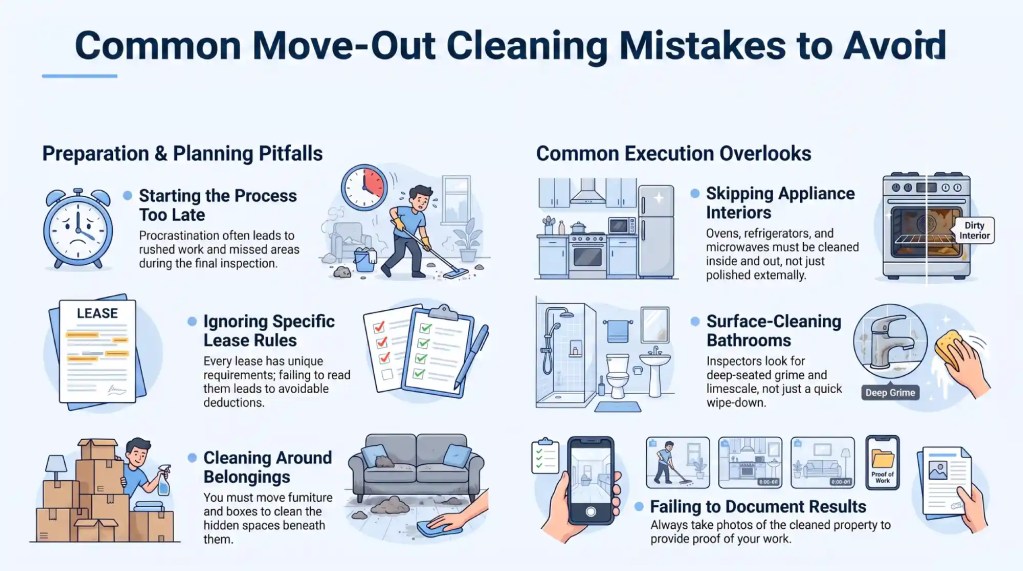
The most common move out cleaning mistakes are starting too late, ignoring lease instructions, cleaning around boxes, missing appliance interiors, giving bathrooms only a surface clean, overlooking floors and pet hair, forgetting detail areas such as vents and baseboards, leaving outdoor spaces unfinished, and returning keys without final photos or cleaning records.
| Move Out Cleaning Mistake | Why It Can Cause Problems | Best Way to Avoid It |
| Starting too late | Rushed cleaning leaves important areas unfinished | Begin preparing before moving week |
| Ignoring lease rules | You may miss cleaning, key-return, or carpet requirements | Read the lease and landlord instructions first |
| Cleaning around belongings | Floors, closets, and corners remain blocked | Clean after the property is mostly empty |
| Skipping appliance interiors | Grease, crumbs, food residue, and odors remain visible | Clean ovens, refrigerators, microwaves, and filters |
| Surface-cleaning bathrooms | Soap scum, hair, and grime stay in hidden areas | Scrub fixtures, tracks, corners, and storage spaces |
| Ignoring floors and odors | Stains, pet hair, and smells affect the final condition | Vacuum, mop, spot-clean, and inspect room by room |
| Missing small details | Baseboards, blinds, vents, and switches look unfinished | Use a final doorway scan in every room |
| Forgetting outdoor areas | Patios, balconies, garages, and storage spaces may still be part of handover | Empty, sweep, and remove trash |
| Skipping fixture checks | Burned-out bulbs or visible issues may be noticed | Review lease-required items before leaving |
| No documentation | You have less proof of the property’s condition | Take photos, video, and save cleaning receipts |
Mistake 1: Ignoring Your Lease and Landlord’s Move-Out Instructions
Before you buy cleaning supplies or start scrubbing, read your lease agreement and every move-out email or checklist sent by the landlord, property manager, or building office. Different rentals have different expectations. One property may require you to return all mailbox keys, garage remotes, fobs, and parking permits, while another may ask for carpet cleaning, utility confirmation, or a scheduled final inspection. Cleaning the home thoroughly is important, but it does not help if you miss a required key return or leave a parking permit behind.
Review Cleaning Requirements Before You Start
Look for written instructions about end-of-lease cleaning, carpet care, appliance cleaning, trash removal, elevator booking, access-card return, storage areas, pet-related cleaning, and forwarding-address details. Make one written list before moving week so you are not searching through old emails while boxes are waiting to be loaded.
Important items to check include:
- Lease agreement and move-out addendum
- Landlord or property-manager emails
- Building move-out instructions
- Carpet-cleaning requirements
- Appliance-cleaning expectations
- Mailbox keys and building fobs
- Garage remotes and storage keys
- Parking permits or gate cards
- Trash and recycling rules
- Final walkthrough time and key-return method
Mistake 2: Waiting Until the Last Day to Start Cleaning
One of the biggest move out cleaning mistakes is assuming the home will take only a few hours once the furniture is gone. Empty rooms often reveal dust behind beds and sofas, scuffs on walls, pet hair along baseboards, forgotten items in drawers, and buildup inside appliances. Kitchens and bathrooms can take longer than expected because they need more than basic wiping. Start earlier than you think you need to. You do not have to clean every room at once, but you should reduce the final-day workload before movers arrive. This gives you time to notice problems, gather supplies, and decide whether some areas need professional help.
Start With Low-Use Rooms and Storage Spaces
Begin with rooms or spaces you do not use every day. A guest bedroom, linen closet, pantry shelf, spare bathroom, garage corner, basement storage area, or hallway cabinet can often be cleaned early without interrupting daily life. This spreads the work across several days and keeps you from facing an entire property after a long moving day.
Start with tasks such as:
- Emptying closet shelves
- Removing old food from pantry areas
- Sorting storage bins
- Cleaning unused drawers
- Donating unwanted items
- Clearing garage shelves
- Wiping low-use cabinets
- Removing old toiletries and cleaning products
Leave Floors, Trash, and Final Photos for Last
Floors should be cleaned after furniture, boxes, and bags are removed. The same is true for final trash removal and final move-out photos. If you vacuum before movers leave, you may have to repeat the work after boxes drag across the floor or shoes track in dust.
Save these final tasks for the last 24 hours:
- Final vacuuming and mopping
- Trash and recycling removal
- Refrigerator and freezer check
- Appliance interior check
- Window and door check
- Final photos and video
- Key, fob, and remote collection
Mistake 3: Cleaning Around Furniture, Boxes, and Personal Belongings
Cleaning around boxes and furniture may temporarily make the property look better, but it rarely produces a true move-out clean. Furniture hides floor marks, baseboards, dust lines, pet hair, wall scuffs, and debris in corners. Packed boxes block closets, cabinets, and storage spaces that need to be emptied before the final walkthrough. A move-out clean works best when the property is empty or nearly empty. This gives you clear access to surfaces that are normally covered and helps you see the home’s actual condition.
Empty Cabinets, Closets, Drawers, and Storage Areas First
Before wiping any storage area, remove everything from it. That includes shelf liners, old cleaning supplies, food, toiletries, hangers, paper, batteries, laundry products, and loose items that have collected over time.
Check these areas carefully:
- Kitchen cabinets and drawers
- Pantry shelves
- Refrigerator drawers
- Bathroom vanities
- Medicine cabinets
- Bedroom closets
- Laundry shelves
- Under-sink storage
- Garage shelves
- Basement or attic storage
- Balcony storage boxes
- Entryway cabinets
Watch for Small Left-Behind Items
Small leftover items can make a property look unfinished even after the major cleaning is complete. A single bag under the sink, old food in the refrigerator, spare hangers in a closet, or toiletries in a bathroom drawer can create extra work for the landlord or next occupant. Before leaving, open every drawer, cabinet, closet, appliance, and storage bin. Look under sinks, behind doors, on high shelves, and in outdoor spaces. A final empty-room check is one of the easiest ways to avoid this mistake.
Mistake 4: Skipping Kitchen Appliances and Cabinet Interiors
The kitchen is often one of the most noticeable areas during a move-out inspection. It is also one of the easiest places to underestimate. Wiping countertops and appliance exteriors is not enough if the oven still has grease, the refrigerator drawers contain food residue, or the dishwasher filter has buildup. RMS Cleaning’s move-in and move-out service includes kitchen cleaning options such as countertops, sinks, backsplashes, and appliance exteriors, as well as selected interior appliance or cabinet cleaning upon request.
Deep Clean Appliances Inside and Out
Kitchen appliances collect food residue, grease, spills, crumbs, and odours in areas that are not always visible at first glance. Work through each appliance slowly, rather than cleaning only the exterior.
Check and clean:
- Oven interior and oven racks
- Oven door glass
- Stovetop and burner caps
- Range hood and visible grease
- Refrigerator shelves and drawers
- Refrigerator seals and handles
- Freezer compartments
- Microwave plate and interior walls
- Dishwasher filter and interior
- Appliance trays and drip areas
- Handles and control panels
For most hard surfaces, cleaning with soap, water, and scrubbing is the first step. Understanding the difference between cleaning vs. disinfecting is vital; you need a disinfectant to actually kill the spores
Mistake 5: Giving the Bathroom Only a Quick Surface Clean
Bathrooms can look clean from the doorway while still having soap scum on glass doors, hair behind the toilet, buildup around faucet bases, residue in shower tracks, or forgotten items in vanity drawers. A quick wipe of the sink and mirror may improve the appearance, but a move-out bathroom needs closer attention. Focus on the areas where moisture, hair, soap, and daily products collect. These details matter because bathrooms are small spaces, and buildup becomes more obvious once towels, rugs, and personal products are removed.
Clean the Toilet, Tub, Shower, and Sink in Detail
Start with the toilet, tub, shower, and sink because these areas often need a little more time. Let suitable products sit as directed on the label, then scrub carefully with the correct brush or cloth for the surface.
Your bathroom checklist should include:
- Toilet bowl and underside of the rim
- Toilet seat, lid, hinges, and flush handle
- Toilet base and floor around it
- Space behind the toilet
- Bathtub and shower floor
- Shower walls and tile
- Glass shower doors
- Shower tracks and corners
- Soap scum and visible grout buildup
- Bathroom sink and faucet
- Vanity countertop and edges
Mistake 6: Ignoring Floors, Wall Marks, Pet Hair, and Odours
Empty rooms make floor and wall marks and odours much more noticeable. A carpet that looked fine under furniture may have dust lines or stains. Hardwood floors may show scuffs. A closet may have pet hair in the corners. A kitchen or bathroom may smell fresh, while a hallway still holds a food-, smoke-, or dampness-related odour. This step is less about making the property perfect and more about checking it honestly after all belongings have been removed.
Clean Floors According to Their Material
Different floors need different care. Vacuum carpets slowly, especially along walls and inside closets. Sweep hard floors before mopping so dirt and grit do not spread around. Use products that are suitable for the surface and follow the manufacturer’s instructions.
| Floor Type | Practical Move-Out Task |
| Carpet | Vacuum thoroughly, treat visible stains, remove pet hair |
| Rugs | Vacuum, shake out if appropriate, check for stains |
| Hardwood | Sweep first, then use a suitable floor cleaner |
| Laminate | Use minimal moisture and a surface-safe cleaner |
| Tile | Sweep, mop, and check grout lines near high-use areas |
| Vinyl | Sweep and mop with a recommended product |
The CDC advises vacuuming carpets and rugs and using cleaning products suited to soft surfaces.
Check Pet, Smoke, Food, and Dampness-Related Odours
Odours can remain after visible mess is removed. Pet hair, old food, trash, smoke, damp towels, dirty filters, and hidden spills can all affect how a rental smells. Open closets, cabinets, and appliance doors during your final check. For minor odours, focus on cleaning the actual source rather than covering it with a strong fragrance. If odours are persistent, especially from pets, smoke, mould-like staining, or damaged materials, you may need further help beyond basic cleaning.
Mistake 7: Forgetting High, Low, and Hidden Detail Areas
Many renters clean what they see at eye level but miss the areas that collect dust and fingerprints over time. Ceiling fans, vents, baseboards, blinds, switch plates, door handles, and window tracks can make a property look unfinished if they are ignored. These tasks usually do not take long, but they should be part of your room-by-room scan before handing over the keys.
Clean High-Touch and High-Visibility Areas
Clean these areas in every room where they apply:
- Light fixtures
- Light switch plates
- Doorknobs
- Door handles
- Air vents
- HVAC grates
- Exhaust fans
- Ceiling fans
- Window blinds
- Windowsills
- Window tracks
- Baseboards
- Door frames
High-touch surfaces such as counters, light switches, and doorknobs should be cleaned regularly. The CDC also advises using a product suitable for the surface and following the label instructions.
Mistake 8: Leaving Outdoor, Storage, and Shared Spaces Behind
Patios, balconies, garages, entryways, storage lockers, shared yards, walkways, and laundry areas are easy to forget because they are not part of the main living space. Still, they may be included in the rental handover or final inspection. These areas should be empty, swept, and free from trash or personal belongings. Check your lease before using pressure washing, strong chemicals, or making changes to shared outdoor spaces.
Check Outdoor and Storage Areas Before Returning Keys
Review every space connected to the rental, including:
- Patio or balcony
- Outdoor furniture
- Planters
- Garage
- Storage locker
- Entryway
- Shared yard
- Walkway
- Sliding-door tracks
- Laundry area
- Outdoor trash area
Remove all personal items, sweep visible dirt, and make sure there are no trash bags, boxes, tools, or loose items left behind.
Mistake 9: Ignoring Basic Safety Fixtures and Air-Quality Details
Move-out cleaning is not a full maintenance inspection, but basic visible checks can help you spot items that may need cleaning, reporting, or handling per the lease. Burned-out bulbs, dirty vent covers, loose filters, dripping faucets, and toilet problems are easier to address before key return than after. Do not try to hide maintenance issues. Cleaning can improve the appearance of a vent, faucet, or fixture, but it cannot fix a leak, a broken lock, a damaged appliance, or an electrical problem.
Check Fixtures That May Be Noticed During Handover
Review visible items such as:
- Burned-out light bulbs
- Smoke detectors
- Smoke-detector batteries where tenant responsibility applies
- Toilet flushing
- Faucet leaks
- Exhaust fans
- Air vents
- HVAC filters
- Door locks
- Visible plumbing issues
- Damaged outlet covers
Mistake 10: Returning Keys Without Photos, Receipts, or a Final Handover Plan
A clean rental is easier to document than to explain later. Before returning keys, take clear photos and a short walkthrough video after the property is empty and cleaned. Save professional cleaning receipts, especially if you booked carpet cleaning, appliance cleaning, or a move-out service. New Jersey’s security-deposit bulletin states that landlords may use a deposit to ensure lease performance and explains the state’s rules on deposit handling. The bulletin also notes that it is informational and not a substitute for legal advice.
Take Final Move-Out Photos and Video
Photograph the property in natural light where possible. Take wide shots of each room, then close-up shots of the areas most likely to be questioned.
Capture:
- Each empty room
- Oven and refrigerator interiors
- Kitchen cabinets and drawers
- Bathroom fixtures
- Closets and shelves
- Floors and carpets
- Walls and windows
- Patio, balcony, garage, or storage area
- Keys, fobs, remotes, and access items before return
When Professional Move-Out Cleaning Makes More Sense Than DIY
DIY move-out cleaning can work well for a small, lightly used rental when you have enough time to work through the details. But some situations are harder to manage alone. A large home, heavy kitchen grease, several bathrooms, pet hair, carpet stains, a tight deadline, or a long-distance move can make professional help a practical option. RMS Cleaning provides move-in and move-out cleaning for houses, condos, and apartments, as well as for landlords, property managers, and realtors across New Jersey. Its service options include whole-home dusting, floor cleaning, kitchen and bathroom cleaning, baseboards, vents, blinds, and selected add-ons for appliance interiors, cabinets, windows, patios, and garages. Once your belongings are packed and the property is clear, We can handle the deeper cleaning work before handover. This may include kitchens, appliances, bathrooms, cabinets, closets, floors, baseboards, blinds, vents, and other detail areas that are easy to miss during a rushed move.
Moving Out in New Jersey?
Let RMS Cleaning handle the final deep clean before walkthrough day.
FAQs About Move Out Cleaning Mistakes
What are the biggest move out cleaning mistakes?
The biggest mistakes are starting too late, ignoring lease instructions, skipping appliance interiors, leaving cabinets and closets dirty, surface-cleaning bathrooms, overlooking floors and pet hair, forgetting outdoor areas, and failing to take final photos.
What do landlords commonly check during a move-out inspection?
Landlords may review kitchens, appliances, bathrooms, floors, carpets, walls, closets, cabinets, storage areas, odors, trash, outdoor spaces, and returned keys or access items. Exact expectations vary by lease and property.
Can a landlord charge for cleaning after I move out?
A landlord may make deductions for allowable issues under the lease or for damage beyond ordinary wear and tear. Review your lease and New Jersey’s official tenant guidance for your specific situation.
How early should I start move-out cleaning?
Start planning one to two weeks before moving out. Clean low-use rooms, closets, and storage spaces early, then complete floors, appliance interiors, final trash removal, and photos after your belongings are removed.
Is professional move-out cleaning worth it?
Professional help may be worth it when you are short on time, dealing with heavy buildup, moving from a large property, handling pet hair or odors, or preparing for a final walkthrough or rental turnover.