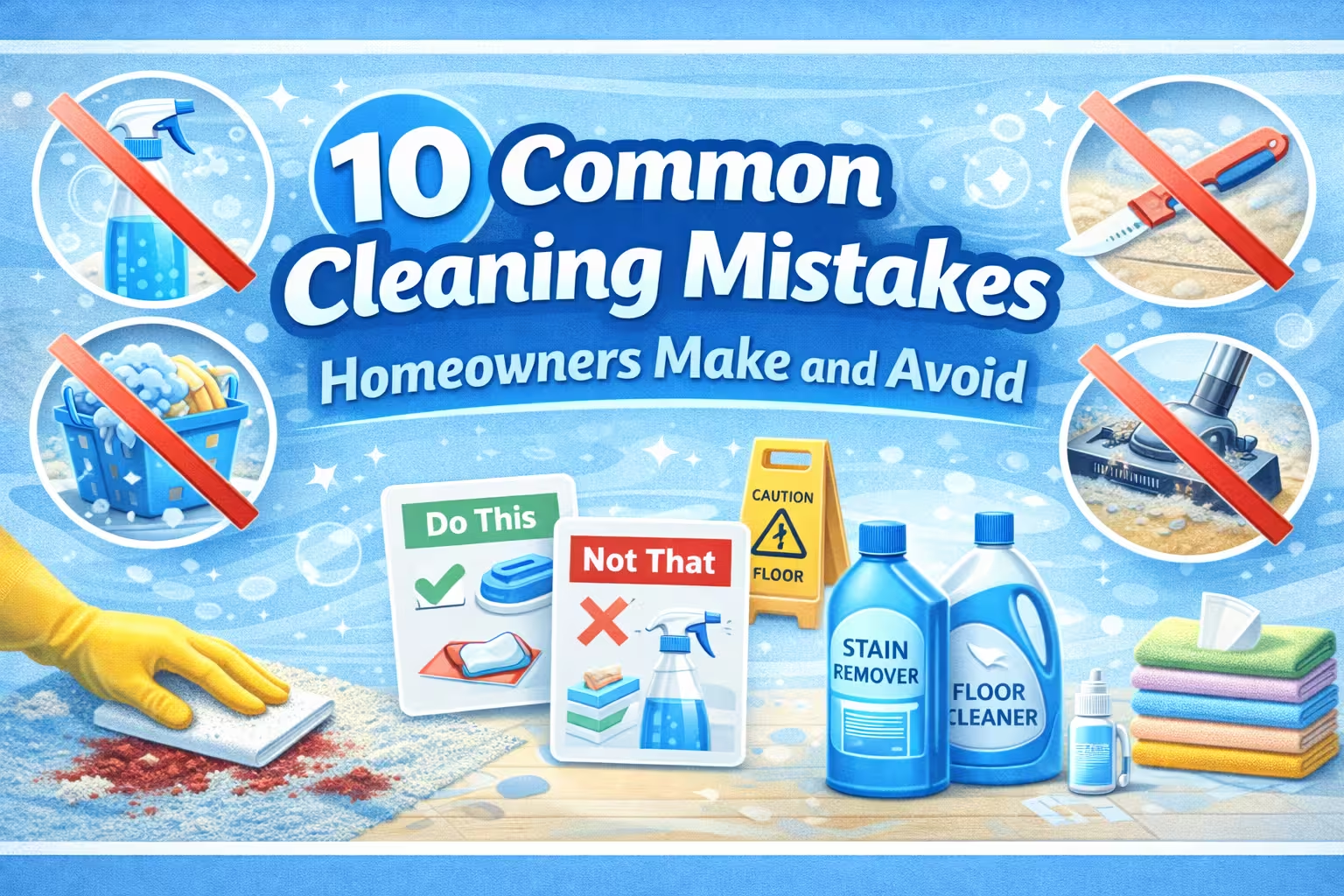
Keeping your home clean may seem straightforward, but many homeowners unknowingly make mistakes that reduce effectiveness, damage surfaces, or even create extra work. Overusing products, skipping high-touch areas, or cleaning in the wrong order can leave your home less sanitary and more stressful. Understanding the most common cleaning mistakes and how to fix them can save time, protect your surfaces, and create a healthier environment. For residents in New Jersey, professional cleaning services like RMS Cleaning can help ensure every corner of your home is thoroughly cleaned, saving you time and effort while keeping your space safe and well-maintained.
Understanding Why Cleaning Mistakes Matter
Cleaning errors do not just affect appearance. They impact health, surface lifespan, and overall home hygiene. Knowing why these mistakes matter helps homeowners avoid repeating them.
Why Proper Cleaning Technique Matters More Than Effort
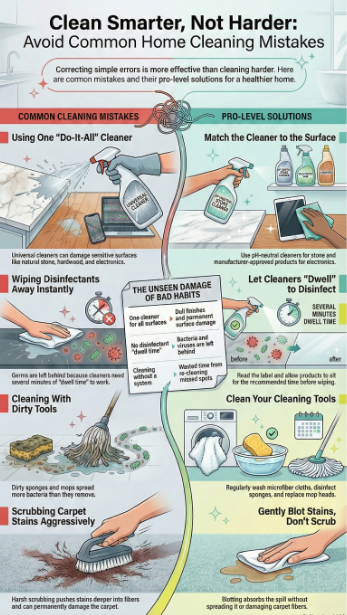
Many people believe cleaning longer or using stronger products will solve household messes. In reality, proper technique has a much bigger impact than effort alone. Incorrect methods can spread germs, leave residue behind, and even damage surfaces over time. For example, wiping too quickly or skipping disinfectant contact time prevents proper sanitation. Correct cleaning techniques help reduce bacteria, protect surfaces, and save time by preventing the need to re-clean areas repeatedly.
Top Cleaning Mistakes
This part focuses on the most common cleaning mistakes homeowners make during daily and weekly cleaning routines. These mistakes often feel harmless, but slowly affect cleanliness and surface condition throughout the home.
1. Spraying Cleaners Directly on Surfaces
A common error many homeowners make is spraying cleaning products directly onto surfaces. While it may seem convenient, this approach can leave streaks, saturate surfaces with excess chemicals, or even damage delicate finishes like wood or granite. The better approach is to spray the cleaning solution onto a microfiber cloth and then wipe the surface. This allows for better control, reduces waste, and ensures that the product has enough contact time to work effectively. Professional cleaners, including those who use this method to protect countertops, mirrors, and electronics while achieving a streak-free finish.
2. Overusing Cleaning Products
Applying too much cleaning solution may seem like it would make the job easier, but it often does the opposite. Excess product can leave sticky residues that attract dirt, making surfaces appear dirtier over time. It can also increase chemical exposure for you and your family. Instead, follow the product instructions carefully, and apply only the recommended amount. For tougher messes, repeat the application rather than overloading the surface with chemicals. Regularly using the correct amount of product helps maintain a clean, healthy home without unnecessary waste.
3. Ignoring High-Touch Areas
High-touch surfaces such as doorknobs, light switches, faucets, remote controls, and appliance handles often harbor the most germs, yet they are frequently overlooked during cleaning. Failing to disinfect these areas can lead to the spread of bacteria and viruses within your home. Incorporating these areas into a regular cleaning routine is crucial. Disinfectant wipes or sprays are effective tools for this purpose. For homeowners in New Jersey who want to ensure their homes remain safe and germ-free, professional cleaning teams like RMS Cleaning pay special attention to high-touch surfaces, using EPA-registered products for consistent sanitation.
Many homeowners clean for “appearance” rather than “hygiene.” While a room may look tidy, failing to understand the difference between cleaning, sanitizing, and disinfecting can leave your family vulnerable to bacteria and viruses on high-touch surfaces.
4. Using the Wrong Products for Surfaces
Not all cleaners are safe for every surface, and using the wrong product can cause discoloration, corrosion, or permanent damage. For example, vinegar can etch stone surfaces, while a magic eraser may scratch stainless steel or certain plastics. It’s important to read labels carefully and test a small, inconspicuous area before applying a cleaner to the entire surface. Homeowners who follow this simple step avoid costly damage and extend the life of their furniture, counters, and floors. Professionals are trained to match the correct products to each surface, ensuring your home stays clean and protected.
5. Not Letting Cleaners Sit Before Wiping
Many homeowners wipe surfaces immediately after spraying, assuming quick action speeds up cleaning. In reality, most cleaning products require a short dwell time to break down dirt, grease, and germs effectively. For example, disinfectants often need several minutes to sanitize surfaces completely. Wiping too soon can leave residue and allow germs to survive. A simple tip is to spray, let the solution sit according to the label instructions, and then wipe with a microfiber cloth. We always follow proper dwell times to ensure every surface is sanitized without unnecessary scrubbing or chemical waste.
6. Cleaning Tools Are Often Overlooked
Your cleaning tools can carry more dirt and germs than the surfaces you clean if they aren’t maintained properly. Dirty mops, cloths, sponges, and vacuum filters spread grime rather than remove it. Regularly washing microfiber cloths, replacing sponges weekly, and emptying vacuum filters can prevent cross-contamination. Homeowners often underestimate how quickly bacteria and dust accumulate on cleaning tools, but proper maintenance makes a noticeable difference in cleanliness. We provides fully sanitized, professional-grade equipment to ensure your home receives thorough and safe cleaning every visit.
7. Ignoring Baseboards and Corners
Baseboards, corners, and edges are often forgotten during routine cleaning. Dust, pet hair, and crumbs accumulate in these areas, which can create a layer of grime that spreads when disturbed. Neglecting these spaces can also make your home look less tidy even after thorough surface cleaning. Regularly vacuuming along edges and wiping baseboards keeps the home looking polished and reduces allergens. For busy homeowners in New Jersey, we include these overlooked areas in their standard cleaning services, ensuring every corner of your home is spotless.
8. Mixing Cleaners Improperly
One of the most dangerous mistakes homeowners make is mixing cleaning products, especially bleach and ammonia. This combination produces toxic chlorine gas, which can irritate your eyes, lungs, and skin. Even combining less harmful cleaners can reduce their effectiveness or leave residues that attract dirt. Always read labels carefully and use each product separately. Professionals follow strict safety protocols, using appropriate products for each surface to avoid hazards while achieving deep, safe cleaning results.
Always clean from top to bottom. If you clean the floors first and then dust the ceiling fans, you’ll simply have to clean the floors again. Following a living room cleaning checklist helps prevent this extra work.
9. Using Excess Cleaning Product
Many homeowners believe that using more product equals cleaner surfaces. In reality, excess detergent, spray, or polish often leaves streaks, residues and can even damage certain surfaces like wood, stainless steel, or natural stone. The key is to use the recommended amount, spread evenly, and wipe thoroughly. For busy households in New Jersey, Cleaning staff apply precise measurements and techniques to ensure a streak-free, long-lasting clean without wasting products.
10. Skipping High-Touch Areas
High-touch surfaces like doorknobs, light switches, remote controls, and appliance handles harbor the most germs, yet they are often skipped during cleaning. Neglecting these areas increases the risk of illness and makes your home feel less hygienic. Experts recommend disinfecting these surfaces regularly, especially in homes with children, pets, or frequent visitors. Cleaning includes comprehensive sanitization of high-touch areas, giving homeowners peace of mind and a healthier living environment.
Common Cleaning Mistakes That Cause Long-Term Home Damage
Some cleaning mistakes do not show immediate results but slowly wear down surfaces. Steam mops on hardwood floors can weaken finishes and cause warping. Abrasive cleaners scratch sinks, tubs, and appliances. Mixing cleaning chemicals creates safety risks and harmful fumes. Avoiding these habits protects the home and reduces repair costs.
High-Risk Cleaning Mistakes
| Mistake | Potential Damage |
| Dirty sponges and mops | Bacteria spread |
| Scrubbing carpet spills | Permanent staining |
| Paper towels on glass | Streaks and lint |
| Steam on hardwood | Warped floors |
| Harsh cleaners on electronics | Screen damage |
RMS Cleaning provides professional residential cleaning services that follow proper methods and help keep homes healthier and easier to maintain
Professional Cleaning Tips Homeowners Should Follow
Many cleaning mistakes happen because homeowners rely on habits passed down without checking modern product instructions or surface needs. RMS cleaning professionals follow clear steps that reduce damage and improve results. Reading product labels carefully prevents misuse. Using the right tools for each surface avoids wear and tear. Ventilating rooms while cleaning improves air quality. These simple habits help homes stay cleaner with less effort.
Frequently Asked Questions About Common Cleaning Mistakes
What is the biggest cleaning mistake most homeowners make?
The biggest mistake is using the wrong product for the wrong surface. This leads to residue, damage, and poor results. Many homeowners assume one cleaner works everywhere, which is rarely true. Surface-specific care keeps homes cleaner and safer.
Is vinegar safe for all cleaning tasks?
Vinegar is useful in some cases but unsafe for many surfaces. It damages stone, weakens grout, and dulls finishes. Using vinegar everywhere is one of the most common cleaning mistakes homeowners make. Checking surface compatibility prevents long-term damage.
How often should cleaning tools be replaced or washed?
Sponges should be replaced every one to two weeks. Microfiber cloths should be washed after heavy use. Mop heads and vacuum filters need regular cleaning and replacement based on use. Dirty tools reduce cleaning effectiveness and spread germs.
What is the difference between cleaning, sanitizing, and disinfecting?
Cleaning removes dirt and debris. Sanitizing lowers bacteria levels. Disinfecting kills germs when products are used correctly and allowed to sit. Confusing these steps causes many cleaning mistakes at home, especially in kitchens and bathrooms.
When to Consider Professional Cleaning Services
Some situations require more than routine home cleaning. Move-outs, deep cleaning needs, allergy concerns, and post-construction messes often require professional equipment and experience. RMS cleaning uses proper methods, safe products, and systematic approaches that reduce damage and improve hygiene. Hiring help at the right time saves money and protects surfaces.
Final Thoughts: Clean Smarter for Better Results
Most homes do not need stronger cleaners or longer cleaning sessions. They need better habits. Avoiding these common cleaning mistakes homeowners make improves cleanliness, protects surfaces, and reduces stress. Small changes in technique, product choice, and order of cleaning make a noticeable difference. For homeowners who want consistent results without the guesswork, RMS Cleaning provides professional residential cleaning services that follow proper methods and help keep homes healthier and easier to maintain