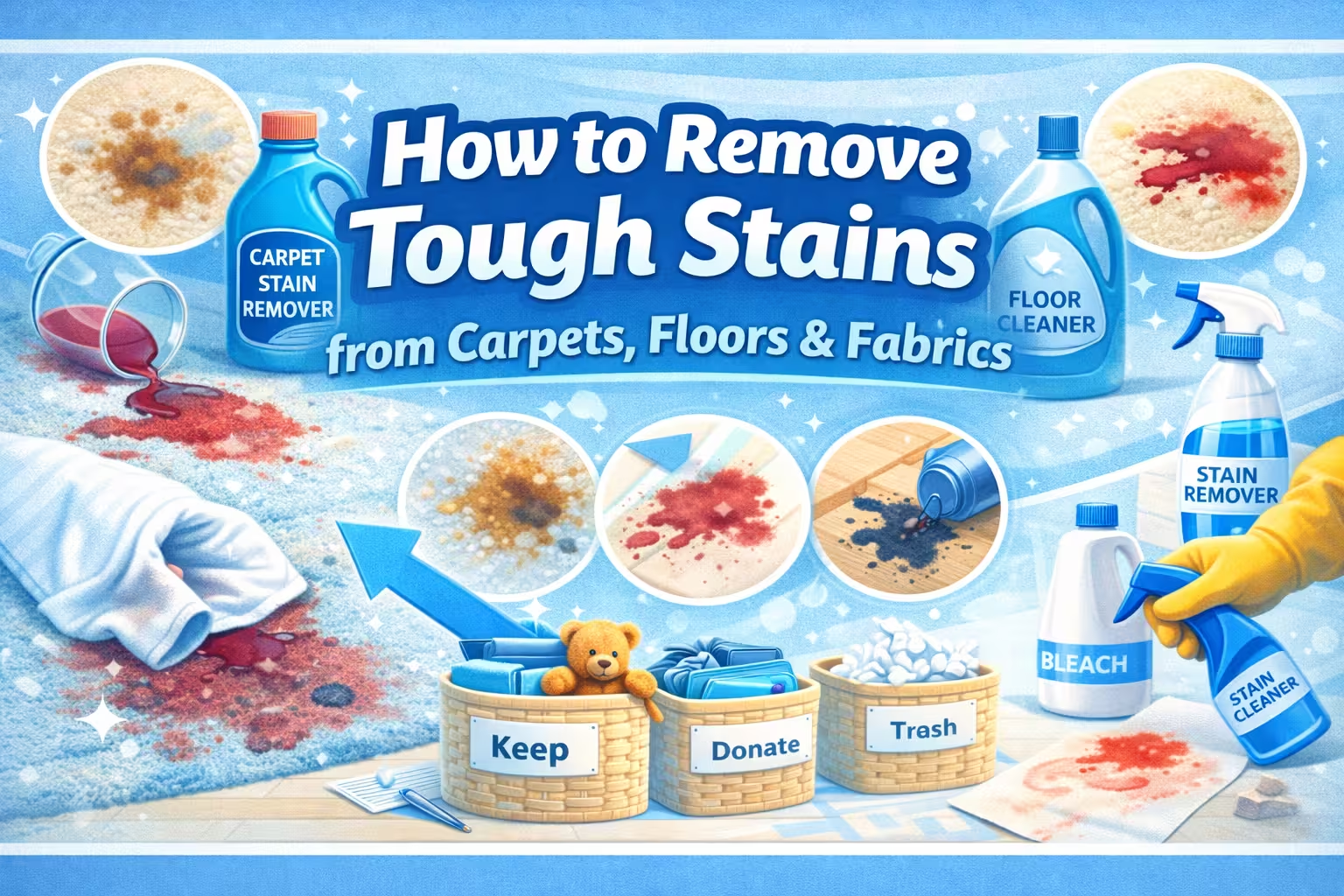
Spills are part of daily life, but the real frustration begins when a simple accident turns into a permanent mark. A splash of wine on a cream carpet, grease tracked across hardwood floors, or a pet accident that leaves both discoloration and odor can quickly affect the look and comfort of your home. Many homeowners across New Jersey try quick fixes, only to see stains return days later or spread further. The difference between temporary improvement and true stain removal lies in understanding how stains bond to surfaces and using the right method for each material. This guide explains the science behind tough stains and how to approach them correctly, whether you are handling it yourself or considering professional support from RMS Cleaning.
Understanding Stains Before You Try to Remove Them
Removing tough stains begins with knowing what you are dealing with. Not all stains behave the same way, and treating them incorrectly can make them permanent.
The Four Types of Stains Found in Most Homes
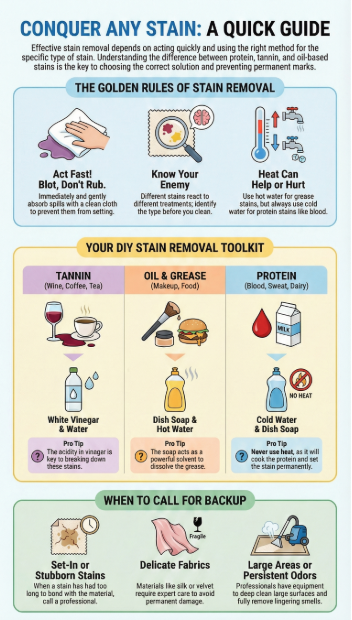
Stains are a product of various substances bonding with the fibers or surfaces they land on. When a stain occurs, different types of substances interact with materials in different ways, which is why not all stains are treated the same way. Stains generally fall into four categories:
- Protein-based stains: These include blood, sweat, dairy, and egg stains. These stains are usually more difficult to remove if they set because they bond with the fibers.
- Tannin-based stains: Coffee, tea, wine, and other beverages are rich in tannins that can stain fabrics and carpets. These stains require heat or acidic cleaning solutions to break down the molecules.
- Grease and oil-based stains: These include food oils, makeup, and other greasy substances. Oil-based stains typically require specific solvents like dish soap or commercial degreasers to break them down.
- Pigment-based stains: Ink, dye, and paint fall under this category. These stains can be very tricky, especially on fabrics and carpets, and often require specific stain removers to tackle.
By understanding the nature of stains, you can choose the best cleaning solution and method. For example, protein stains need to be treated with cold water to avoid setting, while grease stains require hot water or solvent-based cleaners to break down the oil.
How Stains Bond to Different Surfaces
The material beneath the stain plays a major role in how difficult it will be to remove. Porous surfaces such as carpet fibers, upholstery, grout, and natural stone contain tiny openings that allow liquids to seep inside. This process, called capillary action, pulls moisture downward quickly. That is why blotting immediately is critical; it removes surface liquid before it spreads deeper.
Non-porous or sealed surfaces like laminate flooring or sealed hardwood resist deep absorption, but they can still suffer from surface discoloration or chemical damage. For example, acidic cleaners may not soak in, but they can strip finishes or cause dull spots.
In many New Jersey homes, older hardwood floors, area rugs, and upholstered furniture require special care because improper cleaning can damage finishes or fabric structure.
Why pH Balance Determines Cleaning Success
The effectiveness of any cleaning solution depends on its position on the pH scale. Acidic cleaners such as vinegar work well on mineral deposits and tannin stains. Alkaline cleaners such as baking soda or dish soap are better suited for grease and oily residues. Neutral cleaners handle general dirt without damaging delicate surfaces.
Using the wrong pH can create permanent damage. Vinegar, for example, can etch marble countertops. Strong alkaline solutions can discolor wool carpets. Bleach can weaken fibers and cause yellowing over time. Professional cleaners are trained to match the pH level to both the stain and the surface, preventing further damage.
If you are dealing with a complex mess, it is vital to understand the difference between cleaning and disinfecting; one removes the visible mark, while the other kills the bacteria that cause lingering odors.
| Cleaner Type | Best For | Avoid On |
| Vinegar (acidic) | Coffee, tea, mineral stains | Marble, natural stone |
| Dish soap (alkaline) | Grease, oil | Wool, silk |
| Enzyme cleaner | Pet stains, blood | Non-organic stains |
| Hydrogen peroxide | Organic discoloration | Dark fabrics without testing |
The Critical First Five Minutes After a Spill
The first few minutes after a spill are often the difference between easy removal and permanent staining. As soon as liquid touches a surface, it begins absorbing and reacting with fibers. Oxidation changes its chemical structure, which can deepen discoloration. Heat from sunlight or room temperature accelerates this process.
Blotting with a clean white cloth removes surface moisture without spreading it. Rubbing pushes the stain outward and deeper. Applying heat too early, especially to protein-based stains like blood or dairy, can lock the stain permanently into fibers. This is one of the most common mistakes seen in residential carpet cleaning across New Jersey homes.
Why Some Stains Come Back After Cleaning
Many homeowners notice that a stain appears gone, only to see it reappear days later. This process is known as wicking. It occurs when moisture left deep in carpet padding brings dissolved residue back to the surface as it dries.
Over-wetting carpet during cleaning increases this risk. Rental machines and home spot cleaners often lack strong suction power, which leaves excess moisture behind. Professional extraction systems remove both the stain and the water thoroughly, preventing residue from resurfacing.
If you’re facing stubborn grime on tile, learning how to deep clean floors safely will save your finish from abrasive damage.
The Hardest Stains Homeowners Struggle With
Certain stains consistently cause difficulty because of how deeply they penetrate or how they chemically react with materials. Red wine stains oxidize and darken quickly. Pet urine leaves both visible staining and bacterial odor. Rust reacts chemically with fibers. Permanent marker contains dyes that bond strongly to materials. Dried blood becomes more difficult because proteins harden over time. Each of these requires a specific treatment method rather than a general-purpose cleaner.
Eco-Friendly Options That Actually Work
Many families in New Jersey prefer safer alternatives to harsh chemicals, especially in homes with children or pets. White vinegar can help break down tannin stains. Baking soda absorbs odors and mild grease. Hydrogen peroxide can lighten organic discoloration when used carefully. Lemon juice provides mild acidic cleaning for certain surfaces.
However, combining vinegar and baking soda reduces effectiveness because they neutralize each other. Hydrogen peroxide can lighten fabrics if not tested first. Even natural solutions must be used properly.
Professional cleaning companies like RMS Cleaning use biodegradable cleaning products that balance safety and performance while avoiding unnecessary chemical exposure.
When Professional Help Becomes the Smart Choice
There are situations where household methods are unlikely to succeed. If a stain has been sitting for weeks, if odor remains after cleaning, if the affected area is large, or if delicate materials are involved, professional equipment can make a significant difference.
High-powered hot water extraction systems inject heated cleaning solution deep into fibers and remove it with strong suction. This process eliminates residue, bacteria, and moisture that standard home machines leave behind. For homeowners in New Jersey dealing with recurring carpet stains or pet odors, professional treatment often saves both time and replacement costs.
Surface-Specific Stain Removal Methods for Homes
Now that you understand how stains form and why some become permanent, the next step is knowing how to treat each surface correctly. A method that works on clothing may damage hardwood floors. A cleaner safe for synthetic carpet may discolor wool. Homes across New Jersey often feature a mix of wall-to-wall carpeting, hardwood flooring, tile kitchens, stone countertops, and upholstered furniture, which means stain removal requires surface-specific care.
Removing Tough Stains from Carpet Based on Fiber Type
Carpet is one of the most stain-prone surfaces because of its absorbent fibers and padded backing. However, not all carpets react the same way to moisture or cleaning agents.
Synthetic carpets such as nylon, polyester, and olefin are more resistant to staining but can still trap oils and pigments. Wool carpets, which are common in higher-end homes, are natural fibers and highly sensitive to strong alkaline cleaners.
When treating a fresh carpet stain, always begin by blotting gently with a clean white cloth to remove as much liquid as possible. Avoid colored towels that may transfer dye. Once excess moisture is removed, choose your treatment based on the stain category.
Protein stains on carpet respond best to cold water and enzyme-based cleaners. Grease stains require a small amount of dish soap diluted in warm water to break down oil molecules. Tannin stains, such as coffee or wine, benefit from mild acidic solutions, but they must be blotted thoroughly afterward to prevent residue buildup.
One issue frequently seen in New Jersey homes is recurring pet urine stains. Surface cleaning may remove the visible mark, but urine often penetrates the carpet padding. Without deep extraction, odor-causing bacteria remain active. Professional hot water extraction equipment removes moisture from deep layers, preventing long-term odor and staining.
If a stain lightens but returns after drying, this is likely wicking. The solution is controlled moisture extraction and proper drying rather than repeated surface scrubbing.
Understanding Upholstery Cleaning Codes Before Treating Stains
Upholstered furniture requires careful attention because the fabric type determines safe cleaning methods. Most furniture tags include a cleaning code that indicates which solutions are safe.
Water-based cleaning is suitable for fabrics labeled with a “W.” Solvent-based cleaning is required for “S” fabrics. Some pieces allow both methods, marked as “WS.” Furniture labeled “X” should only be vacuumed and requires professional care for stain removal.
Food and drink stains on water-safe upholstery can often be treated with a mild detergent solution applied sparingly. Over-saturating fabric can cause water rings or push stains deeper into cushions. Grease stains require a solvent-based treatment because water alone will not lift oil.
Delicate materials such as silk, velvet, or linen should not be aggressively scrubbed. These fabrics can distort, fade, or lose texture. In many New Jersey homes with formal living rooms or heirloom furniture, professional upholstery cleaning protects the integrity of the material while addressing deep-set stains.
Persistent odor within cushions often indicates moisture retention beneath the fabric. Deep extraction and controlled drying are necessary to fully eliminate the problem.
Removing Stains from Hardwood Floors Without Damaging the Finish
Hardwood flooring is common throughout New Jersey, especially in older properties and renovated homes. Stain treatment depends on the floor’s finish.
Surface-sealed hardwood, typically coated with polyurethane, resists deep absorption. Light water stains often appear as white rings caused by trapped moisture. These may be reduced by gently rubbing with a soft cloth and minimal moisture. Grease spots can be cleaned with a mild dish soap solution, followed by immediate drying.
Dark stains that penetrate deeper into the wood are more serious and may require refinishing if they have soaked through the protective layer. Pet stains, in particular, can penetrate unsealed areas and cause discoloration.
It is important to avoid vinegar on hardwood floors with wax finishes, as acidic solutions can break down protective layers. Excess water should never sit on hardwood because it can cause swelling or warping. When floors show widespread staining or dullness, professional cleaning combined with appropriate finish-safe products can restore appearance without causing surface damage.
Treating Stains on Laminate Flooring Safely
Laminate flooring contains a high-density fiberboard core that swells if exposed to excessive moisture. For this reason, stain removal must involve minimal liquid.
Most surface stains on laminate can be treated with a lightly damp cloth and gentle cleaner. Ink marks may require a small amount of rubbing alcohol applied carefully. Grease spots respond to diluted dish soap.
Standing water must always be avoided. Once moisture seeps into seams, swelling and edge lifting can occur. Many homeowners unintentionally damage laminate by over-wetting during cleaning. Professional floor cleaning services use controlled moisture methods that prevent seam damage while removing embedded residue.
Removing Stains from Natural Stone Countertops
Stone countertops such as granite and marble require different care depending on whether they are sealed. Granite is more resistant to staining but can still absorb oils if not sealed properly. Marble is softer and reacts quickly to acidic substances.
Oil stains on stone may be treated using a poultice made from baking soda and water, applied over the stain and left to draw out the oil. Acidic stains, however, cause etching rather than discoloration. Etching alters the stone surface and may require polishing rather than cleaning.
Vinegar should never be used on marble or natural stone because it can dull the surface permanently. For New Jersey kitchens with high-traffic cooking areas, regular sealing helps prevent deep staining.
Cleaning Tile and Grout Stains Effectively
Tile surfaces are generally durable, but grout lines are porous and absorb stains easily. Kitchen and bathroom grout in New Jersey homes often collects mold, mildew, soap scum, and food residue. Hydrogen peroxide can lighten organic grout stains when applied carefully. Baking soda can help lift surface dirt. For heavy mold or discoloration, deeper cleaning methods may be required.
Steam cleaning can loosen grime, but if grout is already weakened or cracked, excessive heat may cause damage. Professional tile and grout cleaning equipment removes buildup from deep within porous lines and restores brightness without over-saturation.
Eco-Friendly Stain Removal Solutions and Professional Cleaning Services
Eco-Friendly Stain Removal Solutions
When it comes to removing stains, many people are concerned about the environmental impact of commercial cleaning products. Fortunately, several eco-friendly alternatives are just as effective in tackling tough stains. By using natural ingredients such as vinegar, baking soda, and lemon juice, you can create robust cleaning solutions that are gentle on the environment and your surfaces.
- Vinegar: This is one of the most versatile cleaning agents. It can remove stains from fabrics, countertops, and carpets. It works well on tannin-based stains, such as coffee or wine, and can help remove odors from fabrics.
- Baking Soda: A natural abrasive, baking soda is excellent for breaking down oils, grease, and even coffee stains. It can be sprinkled on carpets or upholstery and scrubbed into stains to help lift them out.
- Lemon Juice: The natural acidity of lemon juice helps break down grease and remove stains from a variety of surfaces. It also acts as a natural bleach, which is perfect for whitening whites and removing water stains.
Using these natural cleaners also avoids the harsh chemicals found in some commercial products, making them safer for children and pets. Plus, they often cost less and are easy to find in most households, making them an affordable, sustainable choice for stain removal.
The Benefits of Eco-Friendly Stain Removal
Switching to eco-friendly solutions not only helps your home stay clean but also contributes to a healthier environment. Here are a few reasons why you should consider using natural cleaning methods:
- Healthier Home Environment: Harsh chemicals in commercial cleaners can contribute to poor indoor air quality, triggering allergies, asthma, or other respiratory issues. Eco-friendly solutions help you avoid these risks by using non-toxic ingredients.
- Safer for Pets and Children: Many commercial cleaners can be harmful if ingested or exposed to skin. Using natural cleaning products ensures that your family, including pets, stays safe from toxic chemicals.
- Sustainability: Using natural, biodegradable cleaning agents reduces your environmental impact. Ingredients like vinegar and baking soda are not only effective but also decompose safely, unlike some synthetic chemicals that can pollute the air and water.
Professional Stain Removal Services: When to Call in the Experts
While DIY stain removal can be effective for many types of stains, some situations require professional expertise. When it comes to particularly tough, set-in stains or delicate surfaces, calling in the professionals can save time and ensure the stain is completely removed without causing damage.
Here are some scenarios where professional help may be needed:
- Set-in Stains: When a stain has been sitting for too long, it can become much harder to remove with standard household methods. A professional cleaning service has specialized equipment and products to lift out stubborn, set-in stains.
- Delicate Fabrics: Some fabrics, such as silk or velvet, require delicate handling when removing stains. A professional cleaner will know how to treat these materials without causing harm.
- Large Stain Removal Jobs: If you’re dealing with a large area covered in stains, such as your entire carpet, cleaning it on your own can be time-consuming and difficult. Professionals can quickly and efficiently treat large stain areas with specialized tools.
- Persistent Odors: Some stains, such as pet urine or food spills, leave lingering odors that DIY solutions may not eliminate entirely. Professional cleaning services use deep cleaning techniques to remove both stains and odors.
We offer expert stain removal services for both residential and commercial spaces in New Jersey. From carpet cleaning to upholstery and fabric care, our team is equipped with advanced cleaning tools and eco-friendly products to tackle even the most stubborn stains.
Why Choose RMS Professional Cleaning Services in New Jersey?
While DIY stain removal techniques are often effective, there are distinct benefits to hiring a professional cleaning service. When you choose RMS Cleaning, you get the expertise and high-quality service that can make a significant difference in your home’s cleanliness and appearance.
- Expert Technicians: Our cleaning professionals are trained to handle all types of stains and surfaces, ensuring the job is done right the first time.
- Advanced Equipment: We use state-of-the-art equipment like hot water extraction machines and commercial-grade stain removers to ensure deep cleaning that’s safe for your carpets and upholstery.
- Time-Saving: Cleaning tough stains can take up a lot of time, especially if you’re unsure of the best method. We handle the hard work for you so that you can focus on other tasks.
- Long-Term Results: Professional cleaning not only removes stains but also helps maintain the longevity of your furniture, carpets, and floors. We ensure your surfaces remain in top condition for years to come.
If you need assistance with tough stains or want to maintain a clean home, don’t hesitate to contact RMS Cleaning in New Jersey. Our expert team is here to help you restore your home to its best condition.
Mastering the Art of Stain Removal
Tackling tough stains doesn’t have to be difficult. By understanding the type of stain you’re dealing with, choosing the proper cleaning solution, and acting quickly, you can remove almost any stain from your carpets, floors, and fabrics. Whether you decide to handle it yourself with eco-friendly methods or call in the professionals for particularly tough stains, there are plenty of ways to keep your home looking fresh and clean.
For homeowners in New Jersey, RMS Cleaning is your trusted partner in stain removal and professional cleaning services. Our team is equipped to handle everything from everyday spills to tough, set-in stains. Contact us today to learn more about how we can help you maintain a spotless, stain-free home.
FAQs
How do I remove tough stains from carpets?
Start by blotting the stain to remove excess liquid, then apply a stain remover suitable for the stain type. Blot again until the stain is gone.
Can I use vinegar to remove stains from fabric?
Yes, vinegar is a versatile cleaner and can be used to remove many types of stains, including wine and coffee stains. Always test in a hidden area first.
How can I remove grease stains from upholstery?
Use a solvent-based cleaner or dish soap with warm water. Gently blot the area, and avoid over-wetting the fabric.
When should I hire a professional cleaner for stains?
Consider professional help for set-in stains, delicate fabrics, large stain areas, or persistent odors that DIY methods cannot entirely remove.
Are eco-friendly stain removers as effective as chemical ones?
Yes, eco-friendly solutions like vinegar, baking soda, and lemon juice are highly effective for most stains and are safer for your health and the environment.